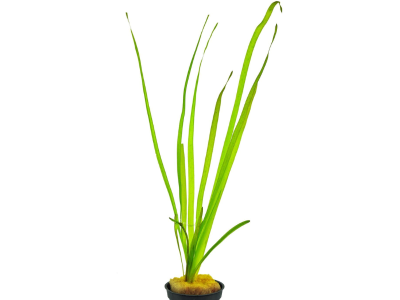
Vallisneria torta
Corkscrew Vallisneria
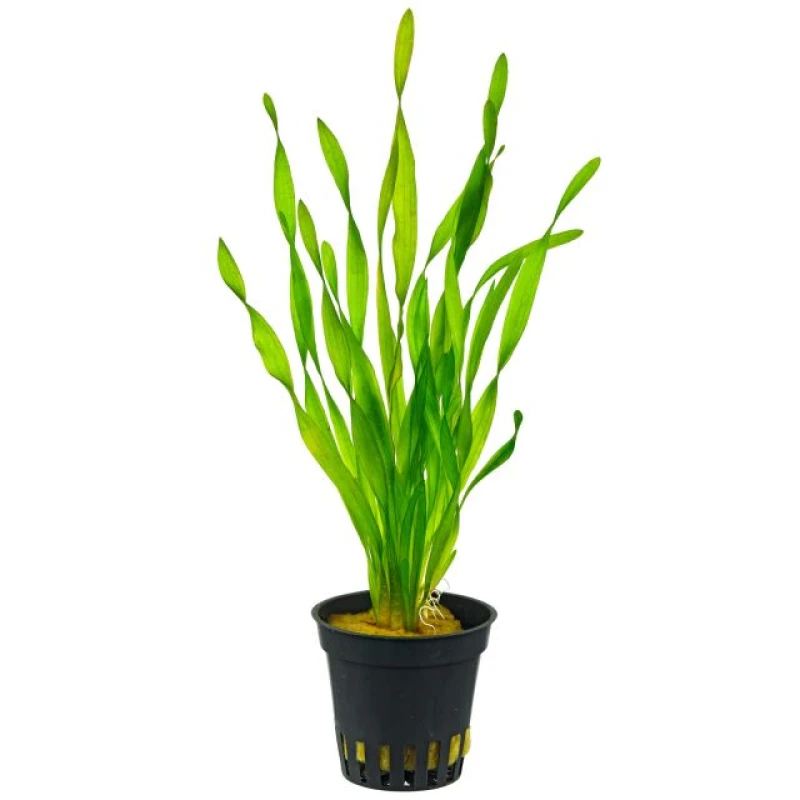
Scientific Classification
Quick Stats
Aquarium Building Information
About This Species
Basic Description
Detailed Description
Corkscrew Vallisneria, occasionally known as Twisted Vallisneria, is a popular and resilient aquatic plant highly valued in the freshwater aquarium hobby for both its aesthetic appeal and its functional benefits. Its most distinguishing feature is its long, ribbon-like leaves that grow in a distinct, tight spiral, adding texture and a dynamic sense of movement to an aquascape. This species is exceptionally adaptable and can be successfully grown in a broad range of aquarium setups, from low-tech tanks without CO₂ supplementation to high-tech planted aquariums.
In terms of aquascaping, this plant is typically used to create a dense background or midground wall of foliage. Its strong vertical growth helps to hide equipment and creates a natural backdrop that makes fish colors pop. The dense thickets it forms offer an ideal refuge for fry, shrimp, and shy fish species, contributing to a more stable and stress-free environment. Its growth rate is directly influenced by lighting conditions; in low-light setups, growth will be slower and the leaves may exhibit a looser spiral, while in moderate to high-light environments, it grows vigorously with more pronounced twisting.
Successful cultivation requires planting it in the substrate, as it is a rooted plant that draws nutrients through its root system. While it is adaptable to various substrates like sand, gravel, or aquatic soil, it benefits from a nutrient-rich base or the occasional use of root-tab fertilizers to fuel its fast growth. A critical planting tip is to ensure the crown—the white or light-green base from which the leaves emerge—is not buried beneath the substrate, as this can lead to rot. This plant's ability to tolerate a wide spectrum of water hardness and pH levels makes it compatible with an extensive variety of fish, from soft-water Amazonian species to hard-water African cichlids. It appreciates some water movement, which helps to keep its leaves clean and deliver dissolved nutrients efficiently. As a prolific grower, it effectively absorbs nitrates and phosphates from the water column, acting as a natural filter that helps to outcompete and suppress nuisance algae.
Scientific Description
Vallisneria torta is a freshwater monocot belonging to the family Hydrocharitaceae. This species, like others in the Vallisneria genus, exhibits a rosulate growth pattern, with leaves emerging directly from a basal meristem or crown. Its defining morphological characteristic is its linear, strap-like leaves that are distinctly and consistently twisted, resembling a corkscrew. The degree of this spiral can be influenced by environmental factors such as light intensity and nutrient availability. The plant lacks an upright stem, instead propagating vegetatively through the production of stolons, or runners, which extend from the base of the plant to establish clonal daughter plants. This method of asexual reproduction allows it to form dense, expansive underwater meadows.
Physiologically, Vallisneria torta is highly adapted to a fully submerged aquatic life. Its ability to thrive without supplemental carbon dioxide suggests an efficient carbon-concentrating mechanism, likely involving the utilization of bicarbonate ions, which is particularly advantageous in the alkaline, hard-water conditions it readily tolerates. Its extensive root system anchors the plant firmly in various substrates while also playing a key role in nutrient uptake. Furthermore, it demonstrates a high capacity for nutrient absorption directly from the water column, making it an excellent agent for phytoremediation. It sequesters significant amounts of dissolved nitrogen and phosphorus, contributing to improved water quality and the competitive exclusion of algae.
Ecologically, in its native Asian habitats, Vallisneria species are foundational. They function as primary producers that stabilize sediment, reduce water turbidity, and create complex three-dimensional habitats essential for invertebrates and the juvenile stages of fish. Through photosynthesis, it is a significant producer of dissolved oxygen, influencing the localized aquatic environment. The International Union for Conservation of Nature (IUCN) has not yet evaluated the conservation status of this species.
Reproduction Description
Propagating Corkscrew Vallisneria is considered very easy, making it an excellent choice for aquarists of all skill levels. The primary method of reproduction in an aquarium setting is asexual, occurring through the formation of stolons, more commonly known as runners. These runners are specialized stems that grow horizontally from the base of the established mother plant, either just above or below the surface of the substrate. New, genetically identical daughter plants develop at nodes along these runners. While the species is capable of sexual reproduction via flowering, this process is uncommon in submerged aquarium conditions.
To propagate the plant, first allow a healthy specimen to acclimate and establish itself in the aquarium. Under favorable conditions, it will naturally begin to send out runners. For the highest success rate, allow the new plantlets on the runner to develop their own root system and several small leaves before separating them. This ensures the plantlet is mature enough to survive independently. To separate, use a pair of clean, sharp aquascaping scissors to snip the runner connecting the daughter plant to the mother plant.
Several environmental factors can accelerate propagation. Providing moderate to high lighting and a nutrient-rich substrate or supplementing with root tabs will encourage more vigorous growth and a higher production rate of runners. Stable water parameters, including consistent temperature and water chemistry, prevent plant stress and promote healthy development. After separating a plantlet, gently plant it into the substrate. It is crucial to position the roots beneath the substrate while keeping the crown—the pale, fleshy area where the leaves join the roots—exposed to the water. Burying the crown can cause it to rot and kill the new plant. These new plantlets are generally robust and will establish themselves quickly, soon sending out runners of their own. To avoid issues like 'melting' (leaf die-off) which can sometimes occur after transplanting, ensure the new location has similar water parameters.
Generate Printable Card
Create a printable card for this creature to display in your store or aquarium. The card includes a QR code for quick access to more information.