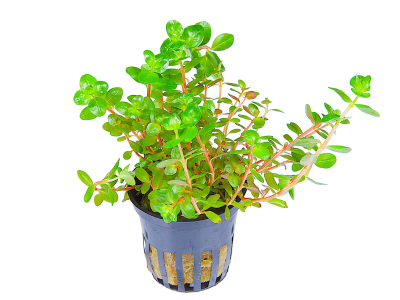
Rotala wallichii
Whorly Rotala
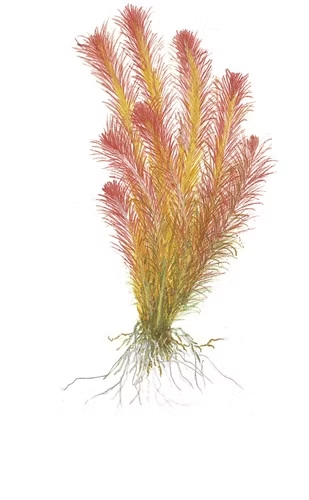
Scientific Classification
Quick Stats
Aquarium Building Information
About This Species
Basic Description
Detailed Description
Whorly Rotala is a demanding but highly rewarding aquatic plant, prized in aquascaping for its feathery texture and potential for dense, bushy growth. Its classification as a difficult species stems from its stringent care requirements. This plant's health is directly tied to the presence of intense illumination. Without powerful lighting, its lower stems will shed leaves, leading to a leggy and unattractive appearance. Furthermore, a supplemental supply of carbon dioxide is not merely beneficial but essential for its survival and vigorous growth. In tanks without CO₂ injection, this plant will often struggle and eventually melt away.
Water chemistry is another critical factor. This species flourishes in soft, slightly acidic water, mimicking its native habitats in slow-moving Asian waterways. It prefers gentle water circulation, as strong currents can damage its delicate stems and foliage. Nutrient availability must be high and consistent. It is a voracious feeder, absorbing large quantities of nutrients to fuel its rapid growth. An enriched substrate, such as aquarium soil, is highly recommended to provide root-level nutrition, which should be supplemented with a comprehensive liquid fertilizer regimen that includes both macronutrients and micronutrients, particularly iron. Regular pruning is necessary not only for propagation but also to maintain its aesthetic form. Trimming the tops encourages the plant to send out side shoots, resulting in a bushier, more compact colony and preventing the lower portions from becoming shaded and dying off. Under optimal conditions, its fast growth rate allows it to quickly fill in the background of an aquascape.
Scientific Description
Rotala wallichii is a validated species within the Lythraceae family, a group that contains numerous amphibious and aquatic plants. Native to wetland environments across Asia, this species typically inhabits shallow, slow-moving, or stagnant bodies of water such as ponds, ditches, and rice paddies. Its morphology exemplifies an adaptation to aquatic life, displaying distinct heterophylly between its submersed and emersed forms. The submersed foliage, which is most familiar to aquarists, consists of fine, needle-like leaves arranged in dense whorls along the stem. This structure maximizes the surface area-to-volume ratio, facilitating efficient gas exchange and nutrient uptake directly from the water column. In contrast, its emersed form develops wider, more robust leaves and can produce small, axillary flowers for sexual reproduction.
Ecologically, R. wallichii serves as a primary producer, converting light energy into biomass at a high rate. Its dense growth provides critical habitat and refuge for microfauna, invertebrates, and fish fry. The plant's high metabolic rate, reflected in its demand for CO₂ and nutrients, also makes it an effective nutrient sink. By sequestering nitrates and phosphates, it plays a role in regulating water quality and mitigating eutrophication in its natural ecosystem. This same biological function makes it a valuable component in planted aquariums for bioremediation. Its classification by the IUCN as Least Concern (LC) suggests a stable and widespread wild population, not currently facing significant threats to its survival.
Reproduction Description
Propagating this plant is considered moderately difficult, as the success of new cuttings is entirely dependent on meeting the same demanding conditions required for mature plant growth. In an aquarium environment, reproduction is achieved exclusively through asexual means by taking stem cuttings. While the species is capable of flowering and producing seeds when grown emersed, this is rare in a submersed setting.
To propagate, use sharp scissors to trim the top several inches from a healthy, vibrant stem. The cuttings should be replanted directly into the substrate. Before planting, it is beneficial to remove the lowest sets of leaves to prevent them from rotting beneath the substrate and to encourage root development from the nodes. For propagation to be successful, environmental factors are critical. The cuttings must be placed in a tank with high-intensity lighting, consistent CO₂ injection, and nutrient-rich water and substrate. Without these elements, cuttings will typically fail to root and will decay.
After planting, the new cuttings require stable conditions to establish themselves. Plant them in small groups but with enough space between each stem to allow light to penetrate and to promote airflow, which helps prevent rot. Under optimal conditions, their rapid growth rate means these new plantlets will quickly develop root systems and begin producing new vertical growth. To encourage a fuller, bushier appearance, regularly trim the tops of the growing plants; this practice stimulates the development of side shoots and provides a continuous source of new cuttings.
Generate Printable Card
Create a printable card for this creature to display in your store or aquarium. The card includes a QR code for quick access to more information.