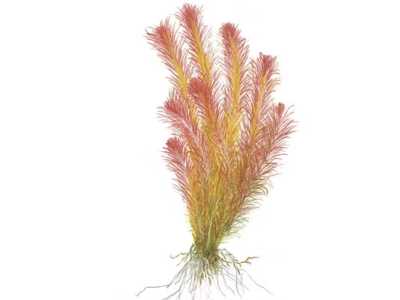
Rotala rotundifolia
Dwarf Rotala
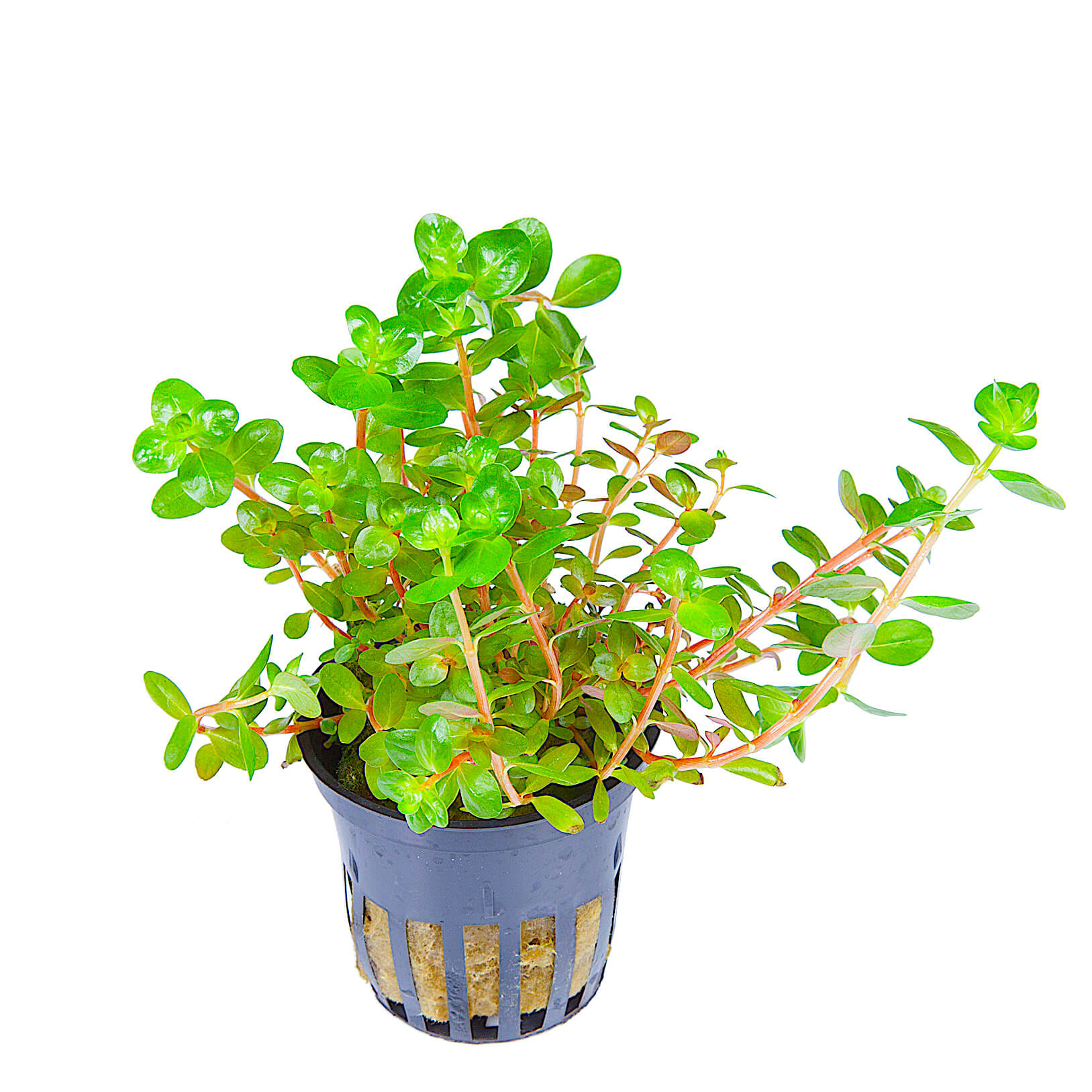
Scientific Classification
Quick Stats
Aquarium Building Information
About This Species
Basic Description
Detailed Description
Dwarf Rotala, a classic in the aquascaping hobby, is a versatile background stem plant known for its vigorous growth and forgiving nature. Its adaptability makes it suitable for a broad spectrum of freshwater setups, from low-tech tanks to high-tech scapes. While it can survive in moderate lighting without supplemental carbon dioxide, its growth pattern and appearance are significantly enhanced by more intense conditions. Under higher light and with CO₂ enrichment, it develops more compact and dense foliage. Without these, it may grow taller and more sparsely as it stretches towards the light source.
Effective aquascaping with this species involves regular maintenance. Due to its fast growth rate, frequent trimming is necessary to maintain the desired shape and prevent the lower portions of the stems from being shaded out, which can cause them to lose their leaves. The trimmed tops can be replanted to easily propagate the plant and create a thicker, more 'forested' look. This plant's high nutrient absorption rate makes it a powerful tool for maintaining water stability. It readily consumes nitrates and phosphates, outcompeting algae for these resources. To sustain its rapid growth and prevent deficiencies, it benefits greatly from a nutrient-rich substrate or a consistent regimen of liquid fertilizers. Providing moderate water flow ensures that nutrients are distributed evenly across all parts of the plant, promoting uniform and healthy development.
Scientific Description
Rotala rotundifolia is an amphibious herbaceous plant belonging to the family Lythraceae. Native to various regions in Asia, it commonly inhabits wetlands, rice paddies, and the margins of slow-moving bodies of water. Its species name, rotundifolia, meaning "round-leaved," refers to its emersed form, which displays fleshy, circular leaves. In its submersed aquatic state, the plant exhibits significant phenotypic plasticity, developing elongated, lanceolate leaves that are better adapted for nutrient and gas exchange underwater. This dimorphism is a key characteristic of the species.
Ecologically, R. rotundifolia is a primary producer that plays a significant role in its habitat. Its rapid growth allows it to colonize suitable environments quickly, providing structural complexity and cover for aquatic invertebrates and small fish. Physiologically, the plant has a high metabolic rate, corresponding with its rapid nutrient uptake and high capacity for oxygen production through photosynthesis. This makes it highly effective at nutrient cycling in closed aquatic systems, where it actively sequesters nitrogenous waste and phosphates from the water column, contributing to what aquarists refer to as bioload reduction. Its widespread distribution and abundance in its native range have led to its classification as a species of 'Least Concern' on the IUCN Red List of Threatened Species, indicating a stable and secure wild population.
Reproduction Description
Propagating Dwarf Rotala is exceptionally easy, making it an ideal species for aquarists of any skill level to multiply. In an aquarium setting, this plant reproduces asexually through vegetative fragmentation. While it can produce flowers and seeds when grown emersed, propagation via stem cuttings is the most common and practical method for hobbyists.
To propagate, simply trim the top, healthy sections of a mature stem. These cuttings should then be planted directly into the substrate, where they will quickly develop new root systems from the stem nodes buried beneath the surface. The lower, leafless portions of the original stems can be discarded, while the remaining rooted base will often sprout new side shoots, leading to bushier growth over time.
Successful propagation is influenced by stable environmental factors. Providing moderate to high lighting is crucial, as it encourages robust development and prevents the new cuttings from becoming 'leggy' or weak. While not strictly necessary, supplemental CO₂ and a nutrient-rich substrate or regular liquid fertilization will significantly accelerate rooting and overall growth. Ensure the cuttings are planted with enough space to receive adequate light and water flow. With proper care, these new plantlets will establish themselves within a week or two, rapidly growing to form a dense and vibrant thicket in the aquarium.
Generate Printable Card
Create a printable card for this creature to display in your store or aquarium. The card includes a QR code for quick access to more information.