Poecilia wingei
Endler's Guppy

Scientific Classification
Origin
Quick Stats
Aquarium Building Information
About This Species
Basic Description
Detailed Description
Originating from tropical freshwater regions in South America, the Endler's Livebearer is a resilient species that has adapted to a variety of water conditions, though they display a distinct preference for harder, mineral-rich water with a neutral to slightly alkaline balance. In the wild, they typically inhabit slow-moving bodies of water such as lagoons and streams, which dictates their need for low-flow filtration in captivity to prevent exhaustion. Physically, they possess a fusiform body shape designed for agility, allowing them to navigate dense underwater vegetation with ease. They are characterized by a high metabolic rate, which translates to a high activity level; these fish are constantly in motion, foraging for food and interacting with conspecifics. Consequently, despite their small biomass, they have a steady oxygen consumption rate and produce a moderate amount of waste, necessitating regular maintenance to keep water parameters stable.
From a behavioral standpoint, Poecilia wingei is non-aggressive and social, relying on a shoal for security and stress reduction. They are known to occupy the upper and middle water columns, utilizing the surface for feeding and the mid-water for swimming. Their dietary requirements reflect their omnivorous nature in the wild, where they function as secondary consumers and cleaners. To maintain optimal health in an aquarium, their diet should mimic this variety, consisting of high-quality proteins alongside vegetable matter. They are avid biofilm consumers and will frequently pick at algae on plants and décor, serving a minor utility role in tank maintenance. While they are hardy, their high energy levels mean they benefit from frequent, small feedings rather than large meals. Hobbyists should provide an environment with ample live plants, which offers both a food source and necessary cover to break lines of sight, reducing social stress within the shoal.
Scientific Description
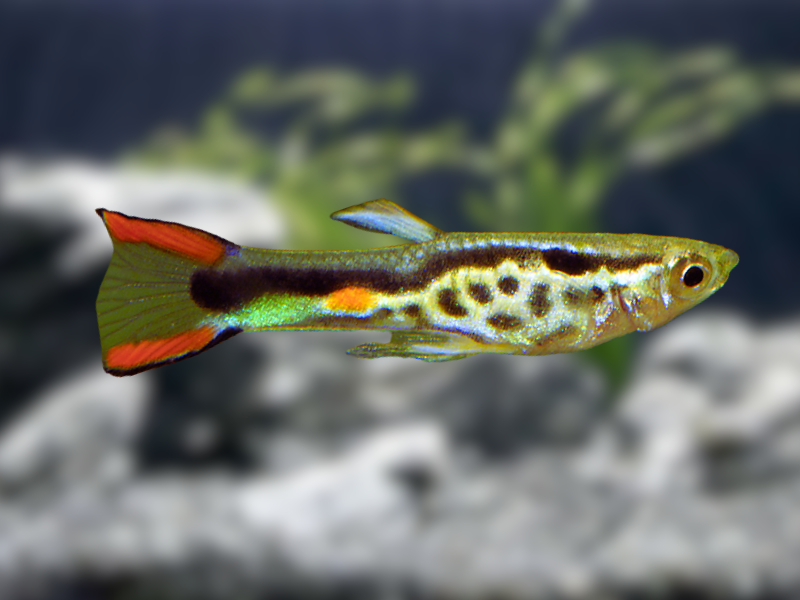
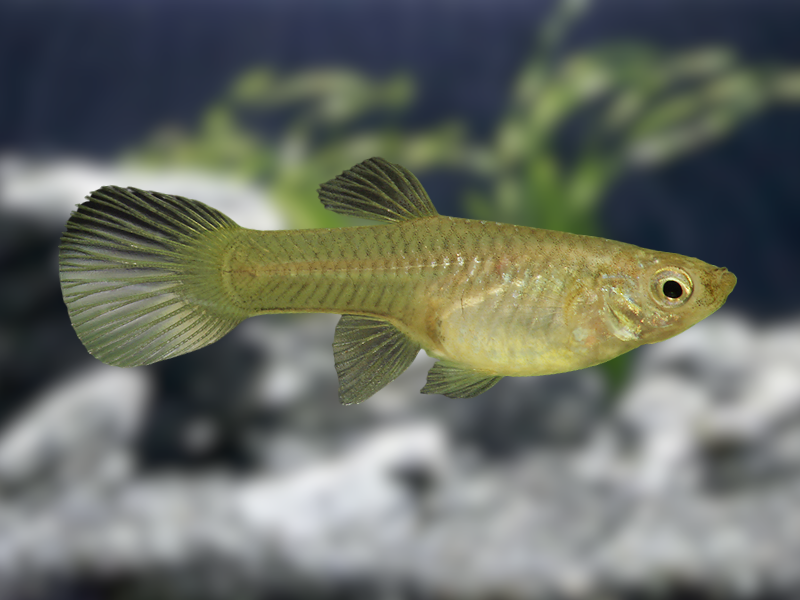
Taxonomically classified within the family Poeciliidae and the order Cyprinodontiformes, Poecilia wingei was recognized as a distinct species from its close relative, Poecilia reticulata, based on behavioral, morphological, and genetic divergence. The species exhibits the classic fusiform body plan typical of actinopterygian fish in this genus, optimized for quick bursts of speed and sustained maneuverability in complex environments. A Defining characteristic of the species is extreme sexual dimorphism, which is evident not only in coloration—with males typically displaying polymorphism—but significantly in body size and morphology. Adult females are considerably larger and more robust than the slender males.
Ecologically, Poecilia wingei functions as a benthopelagic omnivore. Their mouth morphology is superiorly oriented, indicating a specialization for feeding on varied trophic levels, including surface insects, suspended zooplankton (=part of live food), and benthic detritus or algae. Environmental interaction data suggests they play a role in the breakdown of biofilm, contributing to the nutrient cycling within their native microhabitats. While their IUCN status remains Not Evaluated, the specific populations in their endemic range face pressures from habitat modification. In the scientific community, particular attention is paid to maintaining the purity of the species lineage, as they readily hybridize with sympatric or introduced poeciliids, which can lead to the loss of unique ethological and phenotypic traits specific to true Poecilia wingei.
Breeding Description
Breeding Endler's Livebearers is considered highly accessible and is often achieved without specific intervention, ranking them as one of the easiest species to reproduce in captivity. The primary consideration for a successful breeding colony is the management of the male-to-female ratio. Because males possess an extremely high reproductive drive and constantly pursue females, it is strongly recommended to maintain a ratio where females outnumber males significantly, typically at least two or three females for every male. This dispersion of attention prevents any single female from suffering from exhaustion or stress-related illness due to constant harassment.
Sexual dimorphism is pronounced, making identification straightforward once the fish reach maturity. Females are significantly larger and possess a fan-shaped anal fin, whereas males are smaller and possess a modified anal fin known as a gonopodium. This rod-like structure is used to deposit sperm directly into the female, facilitating internal fertilization. As ovoviviparous (livebearing) fish, the eggs develop and hatch inside the female's body. The female will appear noticeably swollen or 'boxy' in the abdominal region as the gestation period concludes. Unlike many other fish that lay eggs, she will release fully formed, free-swimming fry. While adult Poecilia wingei are generally less prone to cannibalizing their offspring compared to other livebearers, providing dense floating plants or moss offers the fry critical shelter and a source of micro-food, ensuring higher survival rates.
Sexual Dimorphism
Generate Printable Card
Create a printable card for this creature to display in your store or aquarium. The card includes a QR code for quick access to more information.


