Anubias hastifolia
Hastate-leaf Anubias
Scientific Classification
Quick Stats
Aquarium Building Information
About This Species
Basic Description
Detailed Description
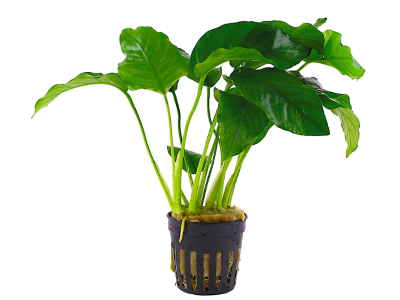
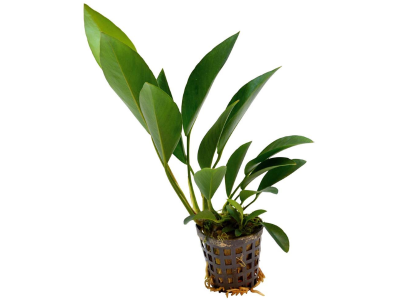
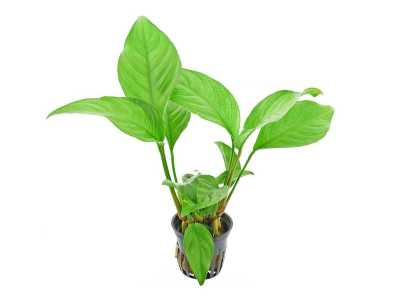
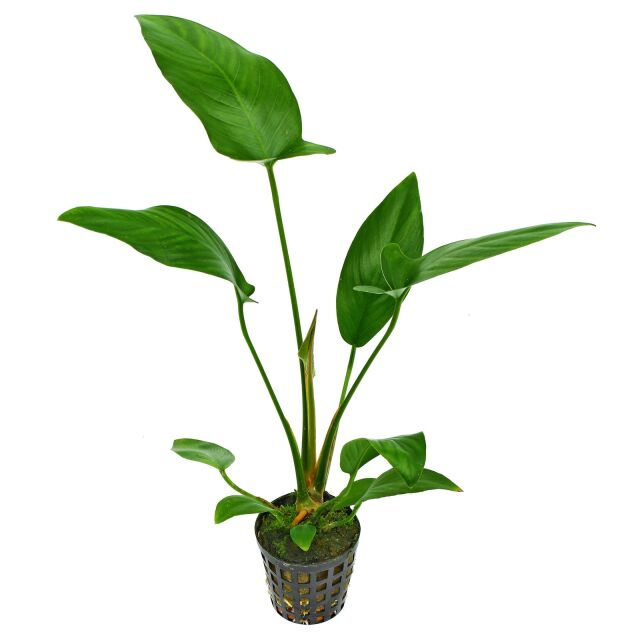
The Hastate-leaf Anubias, also known as the Spearhead Anubias, is a highly sought-after plant for its exceptional hardiness and unique foliage, making it a staple for both novice and experienced aquascapers. Its reputation for being 'easy' is well-earned, as it demonstrates remarkable tolerance to a wide spectrum of water parameters, from slightly acidic to alkaline pH and from very soft to hard water. This adaptability makes it compatible with most freshwater community aquariums.
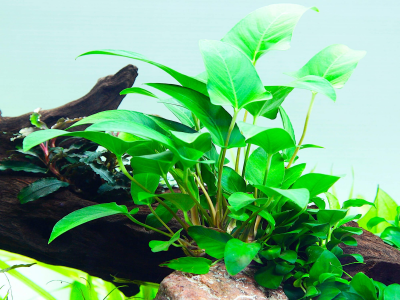
Optimal placement is in the background of the tank, where its potential height can be used to create depth and conceal hardware like filters and heaters. The defining characteristic of this plant is its method of planting; it is an epiphyte. The thick, creeping rhizome—the horizontal stem from which leaves and roots grow—must remain above the substrate. Burying the rhizome will lead to decay and the eventual death of the plant. Instead, it should be attached to hardscape elements like driftwood or porous rocks using cotton thread, fishing line, or aquarium-safe cyanoacrylate glue. Over time, its strong roots will securely anchor themselves to the surface.
This Anubias species is a slow grower with a low metabolic rate. Consequently, its demands for light and nutrients are minimal. It thrives under low to medium lighting conditions. In fact, intense, direct light should be avoided, as it can encourage algae to grow on the surface of its slow-growing leaves. While it can benefit from a comprehensive liquid fertilizer, it is not a heavy feeder and does not require supplemental CO₂ to flourish. Its water flow preference is for gentle currents, which mimic the slow-moving streams of its native African habitat. Because of its tough, leathery leaves, it is an excellent candidate for aquariums containing herbivorous fish or robust cichlids that might otherwise damage more delicate plant species.
Scientific Description
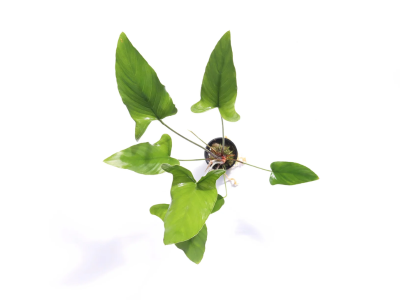
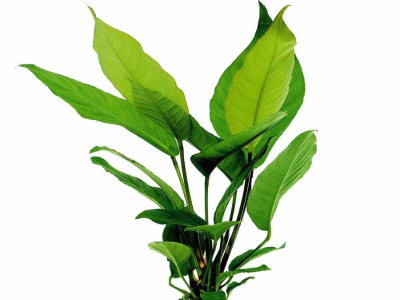
Anubias hastifolia is a flowering plant species belonging to the family Araceae. The genus, Anubias, is named in reference to the Egyptian god of the afterlife, Anubis, alluding to the shaded, darker environments where these plants are typically found. The specific epithet, 'hastifolia', is derived from Latin, with 'hastatus' meaning 'spear-shaped' and 'folium' meaning 'leaf,' which accurately describes the plant's distinctive hastate leaf blades with prominent, pointed basal lobes.
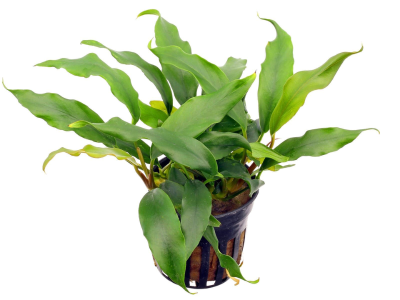
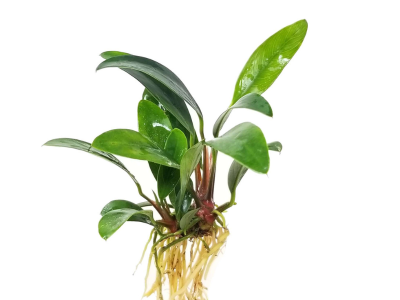
Morphologically, the plant is characterized by a robust, creeping rhizome that can grow to be several centimeters thick. This rhizome serves as the central point for all growth, producing long petioles (leaf stalks) that support the large, leathery leaves, as well as a network of strong, fibrous roots used primarily for anchorage. Unlike many aquatic plants, the roots are not the primary site of nutrient uptake; instead, the plant absorbs nutrients slowly through its leaves and rhizome from the water column.
Ecologically, Anubias hastifolia is native to tropical regions of western and central Africa. It is an amphibious plant, commonly found growing along the banks of shaded, slow-moving rivers and forest streams. It can thrive in both fully submersed and emersed conditions, often colonizing rocks and fallen logs. This adaptation to fluctuating water levels contributes to its remarkable resilience in an aquarium environment. Its physiology reflects its habitat; the slow growth rate is a strategy to conserve energy in low-light, low-nutrient environments. Consequently, its photosynthetic rate and corresponding oxygen output are low. According to the IUCN Red List of Threatened Species, Anubias hastifolia is categorized as Least Concern (LC), indicating it has a widespread distribution and is not currently facing major threats in its native range.
Reproduction Description
Propagating the Hastate-leaf Anubias is a simple and reliable process, making it as easy to multiply as it is to care for. In an aquarium setting, the species reproduces asexually through rhizome division. While it is a flowering plant capable of sexual reproduction, achieving this in a fully submersed environment is exceptionally rare and not a practical method for hobbyists.
The primary method involves cutting the main rhizome. To do this, carefully remove the parent plant from its hardscape. Using a sharp pair of sterile scissors or a razor blade, make a clean cut across the rhizome. It is crucial that each new division has a healthy portion of the rhizome and, ideally, at least three to five leaves. This ensures the new plantlet has sufficient stored energy and photosynthetic capability to establish itself. Cuttings with too few leaves are less likely to survive.
Environmental factors for successful propagation are the same as those for general care. The new cuttings thrive in low to medium light, stable warm temperatures, and gentle water flow. No additional CO₂ or specialized nutrients are required. High light can stress the new cuttings and make them susceptible to algae before new growth begins.
After dividing the rhizome, attach the new sections to driftwood or rocks. Use cotton thread (which will dissolve over time), fishing line, or a small amount of cyanoacrylate super glue. The most critical step is ensuring the rhizome itself and the fresh cut are not buried in the substrate, as this will quickly lead to rot. Only the roots should be allowed to grow down into the substrate if they reach it. Be patient, as new leaf or root growth will be very slow to appear. Maintaining clean water conditions will help prevent any bacterial or fungal infections at the site of the cut, ensuring a healthy and successful propagation.
Generate Printable Card
Create a printable card for this creature to display in your store or aquarium. The card includes a QR code for quick access to more information.