Ammannia gracilis
Large Ammannia
Scientific Classification
Quick Stats
Aquarium Building Information
About This Species
Basic Description
Detailed Description
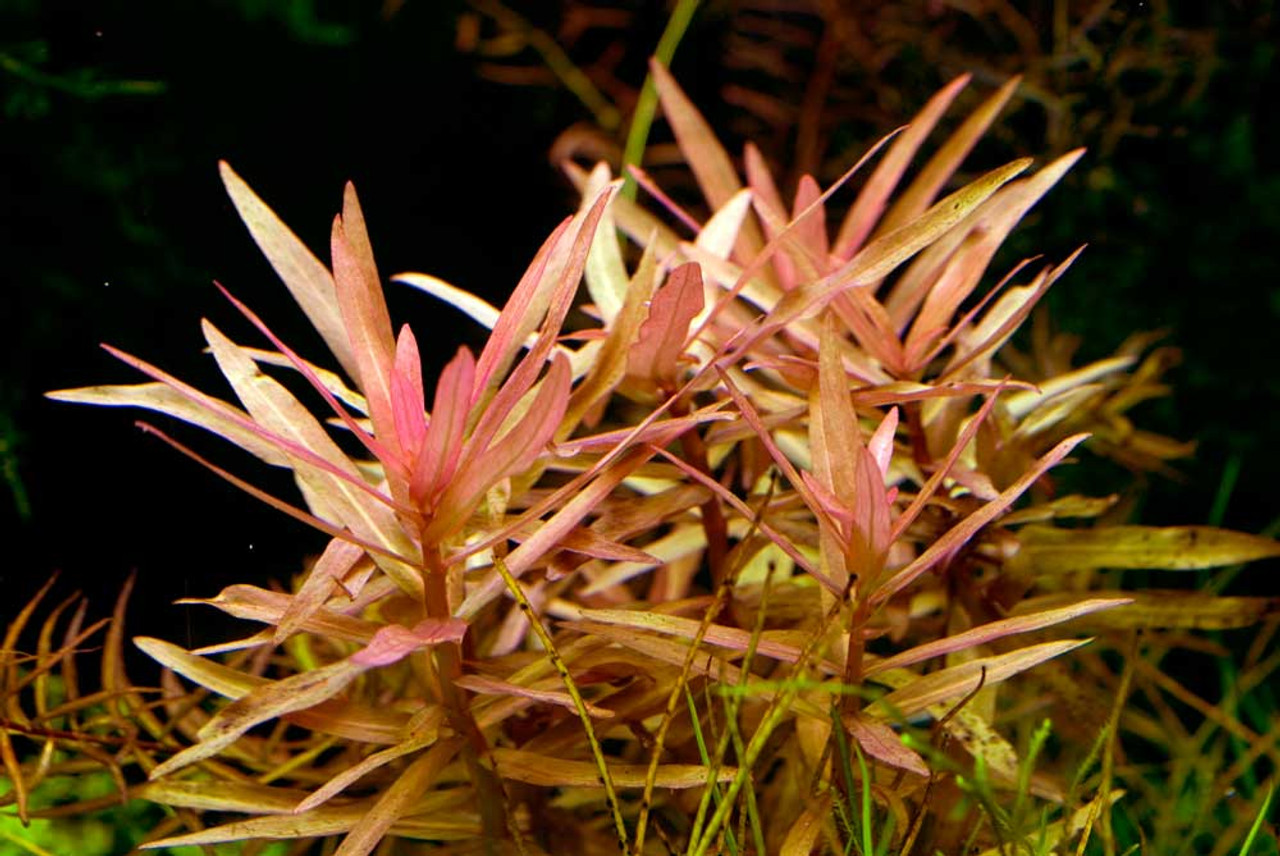
The Large Ammannia, also known by other names such as Red Ammannia, is a popular stem plant prized for the intense coloration it can develop under optimal conditions. Originating from the wetlands of Africa, this species thrives when its natural habitat is mimicked in an aquarium setting. It is best utilized as a background plant due to its impressive vertical growth, where it can form a dense, colorful thicket that serves as a stunning focal point.
Achieving the full potential of this plant requires attention to three key areas: lighting, CO₂ injection, and nutrition. It demands powerful lighting; without it, the lower leaves may be shed, and the plant's growth can become leggy and less vibrant. While it is categorized as having a low CO₂ requirement, providing a supplemental source of carbon dioxide will dramatically improve its growth rate, health, and coloration, making it a far more robust and impressive specimen. This plant is a heavy feeder, reflecting its high nutrient absorption capabilities. It benefits greatly from a nutrient-rich substrate, such as aquarium soil, and regular dosing of a comprehensive liquid fertilizer is essential to prevent deficiencies. A lack of micronutrients, particularly iron, can result in pale, lackluster growth.
In terms of water conditions, Large Ammannia prefers a gentle current, as strong water flow can damage its relatively delicate stems. It is adaptable to a range of softness and acidity levels, though it tends to do best in softer water with a slightly acidic to neutral pH. Maintenance involves regular pruning. By trimming the top sections of the stems and replanting them, you can easily propagate the plant and create a fuller, more compact arrangement. The trimmed bottom portions will often sprout side shoots, further contributing to a bushy appearance. Its rapid absorption of nutrients makes it an excellent choice for balancing a new ecosystem or helping to outcompete algae in a well-established tank.
Scientific Description
Ammannia gracilis is a dicotyledonous, herbaceous perennial belonging to the Lythraceae family, a group that includes many other wetland and aquatic species. Its taxonomic status as a validated species is well-established within the genus Ammannia. Morphologically, the plant exhibits distinct characteristics depending on its growth environment. In its submersed form, which is typical for aquariums, it develops a relatively thick, fleshy stem with leaves arranged in a decussate pattern (opposite pairs at right angles to the adjacent pairs). The submersed leaves are typically lanceolate to obovate and display a range of vibrant colors when provided with high light and nutrient-rich conditions. When grown emersed, its leaves are often greener, firmer, and less elongated, and the plant may produce small, inconspicuous flowers in the leaf axils, which is characteristic of the Lythraceae family.
Ecologically, Ammannia gracilis originates from freshwater marshes, slow-moving rivers, and floodplains in Africa. Its natural habitat is characterized by soft, nutrient-rich substrates, high sun exposure, and calm waters, which explains its preferences in an aquarium setting. Its physiology is marked by a high metabolic rate, fueling its fast growth and substantial biomass production. This rapid growth is supported by a high capacity for nutrient absorption, allowing it to act as an effective biological filter by sequestering dissolved nitrogenous and phosphate compounds from the water column. In turn, it is a prolific oxygen producer through photosynthesis, contributing significantly to the aeration of its aquatic environment. Its IUCN Red List status as 'Least Concern' (LC) suggests that it is abundant and widespread in its native range, facing no immediate conservation threats.
Reproduction Description
Propagating Large Ammannia is a moderately easy process that becomes routine with basic care. This species primarily reproduces asexually in an aquarium environment through vegetative means, although it can produce flowers and seeds if grown emersed. For the aquarist, the most practical and reliable method of propagation is through stem cuttings.
To propagate the plant, select healthy, robust stems and use sharp aquascaping scissors to trim the top several inches. Make your cut just above a leaf node on the parent plant, as this will encourage the remaining base to sprout new side shoots, leading to a bushier appearance. On the new cutting, carefully remove the lowest one or two pairs of leaves to expose a bare section of stem. This cutting can then be planted directly into the substrate, ensuring it is anchored firmly enough to not float away.
Successful rooting and growth of the new cuttings are heavily influenced by environmental factors. High-intensity lighting is crucial; it provides the energy needed for the cutting to establish a new root system and develop leaves without becoming weak or 'leggy.' A nutrient-rich substrate, such as aquarium soil or sand enriched with root tabs, provides essential nutrients directly to the developing roots. While not strictly necessary, supplementing with CO₂ and a comprehensive liquid fertilizer will dramatically accelerate the establishment of the new plants and promote vigorous, healthy growth.
After planting, the new cuttings are essentially independent plantlets. It is important to space them out adequately to ensure each one receives sufficient light and access to nutrients in the water and substrate. To maintain a dense and healthy stand, regular trimming and replanting is the recommended practice. Avoid making sudden, drastic changes to water parameters or lighting immediately after planting, as this can cause the cuttings to melt or stunt their initial growth.
Generate Printable Card
Create a printable card for this creature to display in your store or aquarium. The card includes a QR code for quick access to more information.