Links

  • Home
  • Sitemap
  • Privacy Policy
  • Terms of Service

Share Feedback

  • Suggest a Species
  • Website Feedback
  • Join Our Community

Contact

  • info@tankably.com
  • Book a meeting
  • FacebookTwitter/XInstagramPinterestBluesky

© 2026 Tankably. All rights reserved.

Tankably
My AquariumsBuilderQR Generator
Menu
Database
AllFishesPlantsSnailsCrustaceans
My AquariumsBuilderQR Generator

Alternanthera reineckii

Scarlet Temple
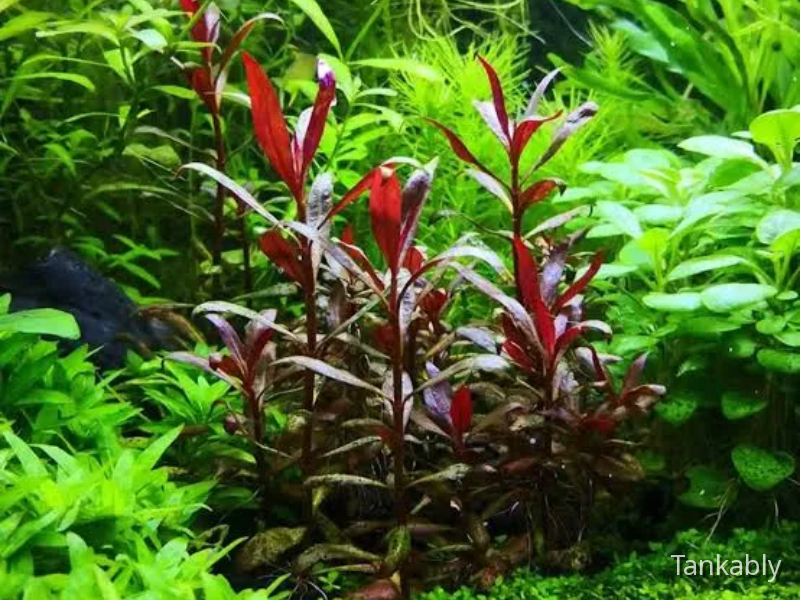
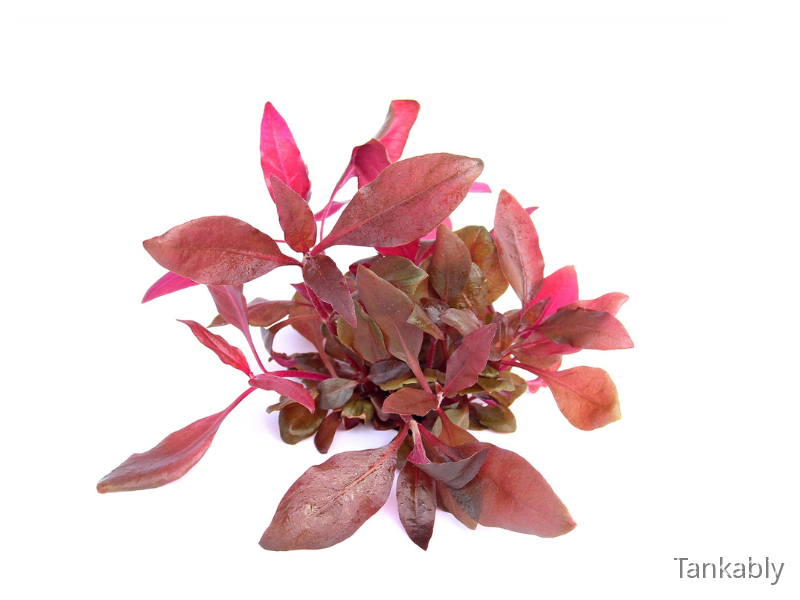
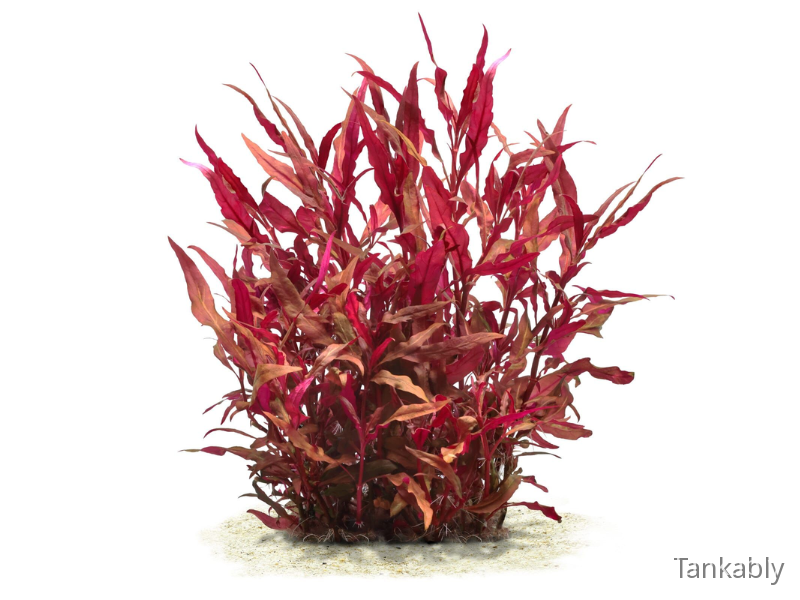
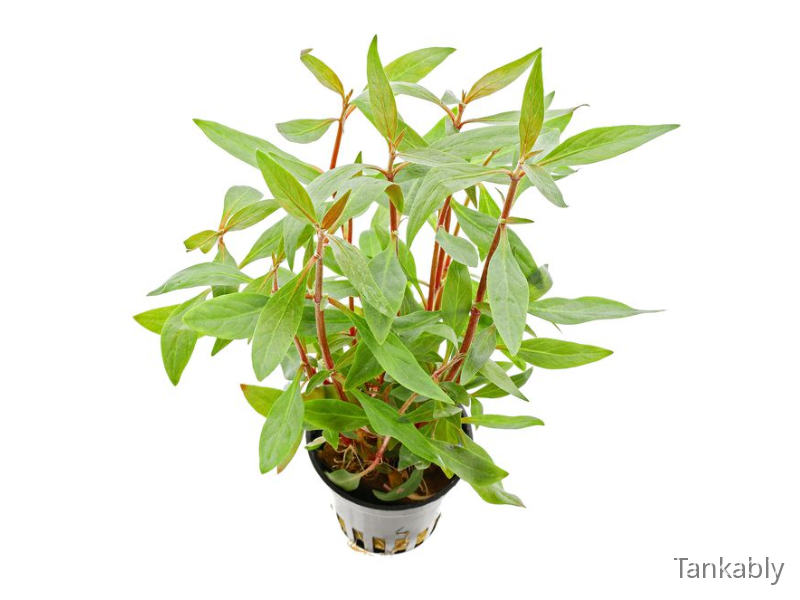
Image of Alternanthera reineckii

Scientific Classification

Kingdom:Plantae
Phylum:Tracheophytes
Class:Magnoliopsida
Order:Caryophyllales
Family:Amaranthaceae
Genus:Alternanthera
Species:reineckii
IUCN Status:Least Concern

Quick Stats

DifficultyMedium
Environment
Freshwater
Temperature22-28°C
pH Level6 - 7.5
Water Hardness36 - 215 ppm
GrowthModerate
LightingMedium - High
Max Height20-50cm
PlacementMidground
CO2 RequirementsMedium
Water FlowLow Flow

Aquarium Building Information

Max Height20-50 cm
PlacementMidground
LightingMedium - High
GrowthModerate
CO2 RequirementsMedium
Water FlowLow Flow
SubstrateSoil, Sand, Gravel
Attachment Methodsubstrate
Oxygen ProductionHigh
Waste reductionHigh

About This Species

Basic Description

A vibrant and popular aquatic stem plant native to South America, this species is known for its striking foliage that adds a splash of color to any aquarium. It is an excellent choice for adding visual interest to the middle areas of a tank, where its upright growth habit creates a beautiful backdrop. While not the easiest plant for absolute beginners, its care requirements are manageable for those willing to provide a bit more attention. For it to truly flourish, it needs good lighting and a nutrient-rich environment. This can be achieved by using a quality substrate designed for plants, or by adding fertilizers to the water and substrate.

In addition to its beauty, this plant serves a practical purpose in the aquarium. It provides shelter and hiding spots for small fish and shrimp, helping them feel more secure. It is also very effective at improving water quality by absorbing excess nutrients, such as nitrates, which helps to control algae growth. As a fast-growing stem plant, it requires occasional trimming to keep it looking its best and to prevent it from shading other plants below. These trimmings can then be replanted to easily propagate new stems.

Detailed Description

Originating from the slow-moving river systems of South America, this amphibious species has become a staple in the aquascaping hobby due to its distinctive appearance and active growth. It is primarily used as a midground plant, where its vertical stems create a dense, colorful hedge that contrasts well with green foliage. Its difficulty is considered medium because its success is closely tied to specific environmental conditions. While it can survive in a range of setups, its appearance will degrade without proper care.

The most critical factor for its health is lighting. It demands medium to high-intensity light to maintain compact growth and prevent the lower leaves from withering and detaching, a common issue known as 'legginess'. Insufficient light will cause the plant to stretch towards the source, resulting in sparse foliage and a less appealing look. Equally important is carbon dioxide supplementation. While it may grow without it, injecting CO₂ significantly boosts its growth rate and vitality, making it a key component for achieving a dense, thriving stand.

As a heavy root and water column feeder, this plant has a high appetite for nutrients. It thrives in a nutrient-rich substrate like aquatic soil but will also do well in sand or fine gravel supplemented with root tabs. A consistent liquid fertilization schedule that includes both macronutrients and micronutrients, particularly iron, is essential for its development. The plant's high nutrient absorption rate makes it an excellent tool for managing the aquarium's bioload, as it efficiently removes waste products from the water column, thus improving overall water quality and producing a significant amount of oxygen. It prefers warm, soft, and slightly acidic water with low flow, mimicking the conditions of its natural habitat.

Scientific Description

Alternanthera reineckii is a validated perennial species within the Amaranthaceae family, a lineage that contains mostly terrestrial plants but includes several notable aquatic genera. Native to South America, this species exhibits amphibious characteristics, thriving both fully submerged and emersed along the banks of rivers and in floodplains. Its IUCN Red List status as 'Least Concern' reflects its wide distribution and stable wild populations.

Morphologically, the plant displays significant plasticity between its submerged and emersed forms. In submerged conditions, it grows as an erect stem plant with leaves arranged in an opposite, decussate pattern at each node. The leaves are typically lanceolate to ovate with a smooth margin. The stem is relatively flexible and will grow vertically towards the light source. The emersed form is more robust, featuring a thicker stem, woodier texture, and often more rounded, waxy leaves to prevent desiccation. In this form, it can produce small, white, and inconspicuous flowers in the leaf axils, which is characteristic of the genus.

Physiologically, A. reineckii is characterized by its high metabolic rate. It performs rapid photosynthesis under optimal lighting, resulting in high oxygen production. This is coupled with a high capacity for nutrient absorption, sequestering significant amounts of nitrogen and phosphorus from the environment. This makes it an effective agent for bioremediation within a closed aquatic ecosystem, contributing to a measurable reduction in the overall bioload. Its adaptability to a broad spectrum of water hardness and a pH range from acidic to slightly alkaline has facilitated its successful cultivation and widespread popularity in the aquarium trade worldwide.

Reproduction Description

Propagating this species is a relatively straightforward process, making it accessible to most hobbyists who can provide a stable environment. In an aquarium setting, reproduction is almost exclusively asexual through vegetative means, as the conditions for flowering and seed production are rarely met underwater. The primary and most effective method of propagation is through stem cuttings.

To propagate the plant, allow a healthy stem to grow several inches tall. Using sharp aquascaping scissors, trim the top portion of the stem, ensuring the cutting is at least a few inches long and has several nodes (the points where leaves emerge). The lower leaves on the cutting should be gently removed from the last one or two nodes to prevent them from rotting under the substrate. The newly prepared cutting can then be planted directly into the substrate, where it will develop its own root system and grow into a new, independent plant. The original rooted base of the trimmed plant will typically sprout new side shoots from the upper nodes, resulting in bushier, more compact growth.

Successful propagation is heavily influenced by environmental factors. High-intensity lighting and the injection of carbon dioxide are crucial for stimulating rapid root development and vigorous new growth on both the cutting and the parent plant. A nutrient-rich substrate or the addition of root tabs provides essential nourishment for the new roots to establish quickly. To ensure healthy development, avoid placing new cuttings in heavily shaded areas. With regular trimming and replanting, an aquarist can quickly cultivate a dense and lush grouping from just a few initial stems.


Generate Printable Card

Create a printable card for this creature to display in your store or aquarium. The card includes a QR code for quick access to more information.
Generate Card

Related Species

  • Alternanthera sessilis

    Alternanthera sessilis

  • Alternanthera cardinalis

    Alternanthera cardinalis