Symphysodon aequifasciatus
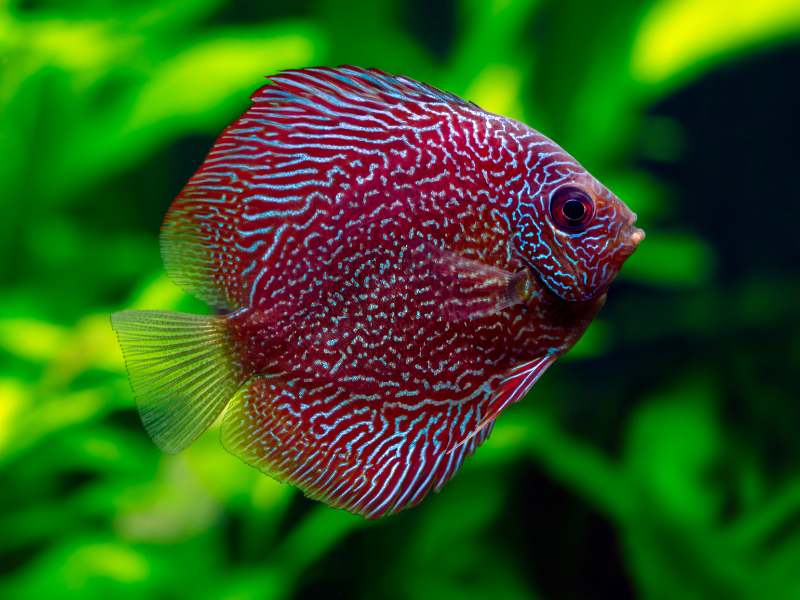
var. Snakeskin
Scientific Classification
Quick Stats
Aquarium Building Information
About This Species
Basic Description
Detailed Description
This species originates from the slow-moving, warm, and acidic waters of the Amazon River basin in South America. Its natural habitat, often characterized by submerged roots and fallen leaves, dictates its requirements in captivity. To thrive, these fish need an aquarium that closely mimics these conditions: warm water temperatures, a low and gentle water flow, and soft, slightly acidic water parameters. Their laterally compressed, disk-like body is an adaptation for maneuvering through dense submerged vegetation and roots in their native environment.
Physiologically, they possess a high metabolism, which results in significant waste production and high oxygen consumption. This biological reality demands an exceptional filtration system and a rigorous maintenance schedule, including frequent water changes, to maintain the pristine water quality essential for their health. A failure to do so can quickly lead to stress and susceptibility to disease. They are omnivores with a hearty appetite, requiring daily feedings of a diverse, protein-rich diet. A mix of high-quality pellets or flakes, supplemented with frozen and live foods, will ensure they receive the necessary nutrients to maintain their health and vibrancy. Due to their high bioload and specific water needs, they are best kept in a species-only tank or with calm, peaceful tank mates that share similar water parameter requirements. Fast or aggressive fish will cause them undue stress. A proper setup should also be tall enough to accommodate their body shape and preferred swimming zones in the middle and lower sections of the water column. When their needs are met, these fish can live for many years, becoming a stunning centerpiece in any large aquarium.
Scientific Description
Symphysodon aequifasciatus is a freshwater fish belonging to the Cichlidae family, endemic to the Amazon River basin. Its morphology is distinguished by a pronounced, laterally compressed (compressiform) body, giving it its characteristic disc-like appearance. This body shape is an evolutionary adaptation for navigating the complex, structurally dense environments of slow-moving tributaries, such as among submerged tree roots and aquatic plants. The species is stenothermal, requiring a narrow and high range of water temperatures, and is adapted to soft, acidic waters with very low conductivity and mineral content. Its IUCN Red List status is currently listed as Least Concern (LC), though its wild populations are susceptible to habitat degradation from deforestation and pollution.
Physiologically, S. aequifasciatus exhibits a high metabolic rate, leading to considerable oxygen consumption and the production of significant nitrogenous waste. This high bioload factor makes it a sensitive indicator of water quality in captive systems. Behaviorally, it is a gregarious species that forms complex social hierarchies within schools. Keeping them in appropriately sized groups is crucial to mitigate intra-species aggression and reduce stress. While exhibiting moderate activity levels, they are prone to stress when housed with highly active or aggressive species. Its diet in the wild is omnivorous, consisting of small invertebrates, algae, and detritus foraged from the substrate and water column. In captivity, this diet must be replicated with varied, high-protein food sources to support its metabolic demands. Reproduction involves biparental care, a hallmark of the Cichlidae family, with a unique aspect where the fry feed on mucus secreted from the parents' skin during their initial stages of life.
Breeding Description
Breeding this species is widely considered a difficult and challenging endeavor, best attempted by advanced hobbyists. Success hinges on recreating a precise set of environmental triggers in a dedicated breeding aquarium. A bonded pair should be isolated in a tank with extremely soft, acidic water, maintained at the higher end of their preferred temperature range. Water must be kept exceptionally clean with minimal nitrates and other pollutants.
Sexing these fish is notoriously difficult as there are few reliable external differences. The most effective method for obtaining a compatible pair is to raise a small group together and allow them to pair off naturally. Once a pair forms, they will select and meticulously clean a vertical spawning site, such as a broad plant leaf, a piece of driftwood, or a purpose-made spawning cone. The female will deposit rows of adhesive eggs on the surface, which the male will then fertilize. Both parents engage in dedicated biparental care. They will guard the eggs aggressively, fanning them with their pectoral fins to provide oxygen and prevent fungal growth. Once the eggs hatch, the wrigglers will remain attached to the spawning site for several days. After they become free-swimming, the fry will instinctively gravitate towards their parents to feed on a nutrient-rich mucus secreted from their bodies. This parental slime is essential for the fry's survival and growth during their first week of life. After this period, the fry can be slowly weaned onto newly hatched brine shrimp and other microscopic foods, while still supplementing with the parental mucus. Throughout this entire process, maintaining pristine water quality is paramount, as both eggs and fry are extremely sensitive to any fluctuations or contaminants.
Related Images
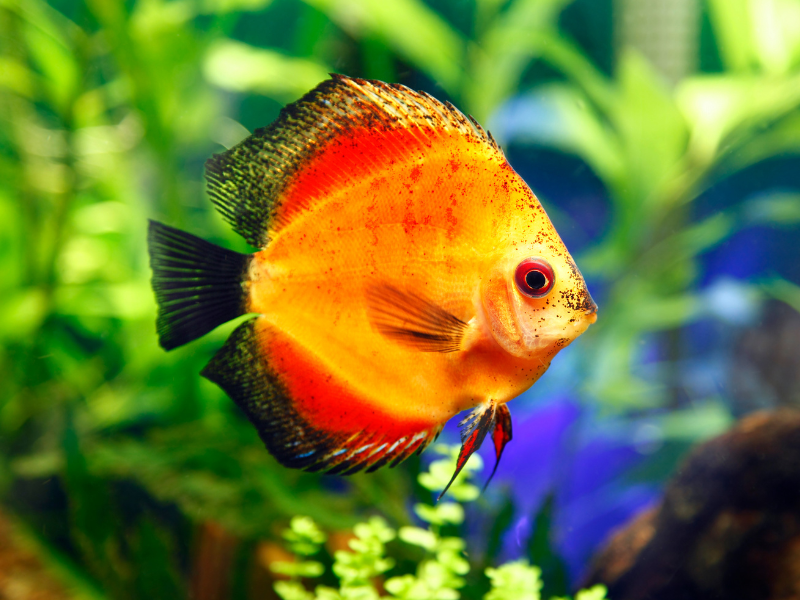
Fire Red
Snakeskin
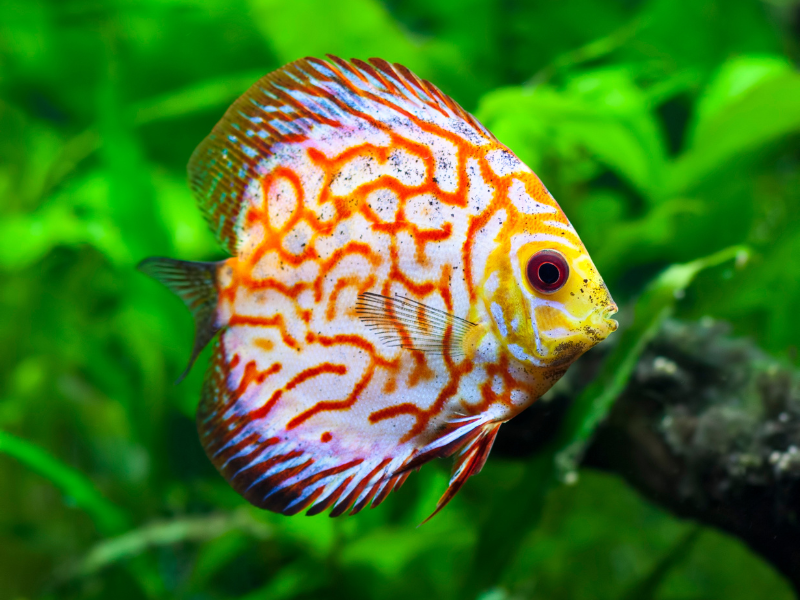
Pigeon Blood
Generate Printable Card
Create a printable card for this creature to display in your store or aquarium. The card includes a QR code for quick access to more information.