Genicanthus bellus
Bellus angelfish

Scientific Classification
Origin
Quick Stats
Aquarium Building Information
About This Species
Basic Description
Bellus angelfish are open-water marine angelfish best kept in stable reef-style aquariums with ample swimming room, strong filtration, and calm tankmates. In aquariums they spend most of their time cruising the midwater, weaving in and out of rockwork and making quick, confident dashes when startled. They are generally considered a good choice for aquarists who want an angelfish that behaves more like a planktivore than a constant grazer on rocks. Provide plenty of live rock for shelter and sleeping sites, but keep the aquascape open so they can maintain their natural, continuous swimming pattern.
Feeding is usually straightforward when offered a varied menu. They do best with multiple small offerings across the day or a daily routine that includes both meaty and plant-based options. In a community setting, ensure they are not outcompeted by aggressive eaters; using more than one feeding point helps.
Temperament is typically peaceful to semi-peaceful, with the most noticeable friction occurring between individuals of the same species if space is limited or if the group is poorly structured. They are often kept as a small social group, which better matches their natural behavior and reduces stress compared with keeping a single specimen in a busy aquarium. Choose tankmates that are not overly territorial and avoid housing them with persistent fin-nippers.
Because they are active swimmers with moderate waste output, consistent maintenance matters: stable salinity, high oxygenation, and low dissolved nutrients support long-term health. Quarantine and careful acclimation are strongly recommended, as new arrivals can be sensitive to shipping stress and may require time to accept prepared foods.
Detailed Description
Bellus angelfish are midwater-oriented marine angelfish that naturally occupy surge-influenced coastal and island reef environments where rock faces and ledges provide shelter while nearby open water supplies a steady drift of food. In captivity, this translates to a fish that needs both structure and space: rockwork to retreat into when threatened, and broad open lanes for continuous swimming. A reef-style layout with caves, overhangs, and unobstructed midwater corridors tends to produce the most confident, natural behavior.
Their feeding ecology is closer to an omnivorous planktivore than a strict algae grazer. They readily learn to take prepared foods when offered variety and consistency. A practical approach is to rotate high-quality pellets and flakes with frozen and live items, emphasizing small particle sizes that remain suspended long enough for midwater feeding. If only one large feeding is provided, some individuals may lose condition over time, especially in competitive community tanks. Many aquarists maintain better body weight and activity by splitting rations into smaller portions, using auto-feeders for dry foods and supplementing with frozen items.
Behaviorally, they are active without being relentlessly aggressive. They tend to ignore most dissimilar tankmates, but may show dominance displays toward conspecifics if the social group is unbalanced or cramped. Keeping them as a small group is often successful when the aquarium provides multiple hiding sites and when introductions are managed so one fish does not establish the entire tank as its territory. If conflict appears, it usually presents as chasing in the water column rather than prolonged biting; rearranging rockwork and adding visual breaks can help reduce line-of-sight pressure.
Because they are fast swimmers, they benefit from good water movement and strong gas exchange. A covered tank is important, as sudden lights-on moments or startling interactions can trigger jumping. Stress reduction is a key husbandry theme: stable parameters, predictable feeding, and compatible tankmates do more for long-term outcomes than any single piece of equipment.
Health-wise, newly imported specimens can be sensitive to transit stress and may arrive with reduced appetite. A structured quarantine period allows you to verify feeding response, monitor for external parasites, and transition the fish onto a dependable prepared diet. During acclimation, dim lighting and readily available shelter encourage quicker settling. Long-term, their moderate bioload and oxygen demand mean they do best with robust filtration, regular nutrient export, and avoidance of chronic elevated organics.
In reef aquariums, their typical feeding style and midwater focus often makes them less disruptive to rockwork than many angelfish, but individual behavior can vary. If the system includes delicate sessile invertebrates, observe closely during the first weeks and be ready to adjust feeding strategy or stocking if exploratory nipping appears. With appropriate space, diet variety, and a calm social environment, they are reliable, engaging fish that reward stable, well-maintained marine systems.
Scientific Description
Bellus angelfish belong to the marine angelfish family and to a genus notable for occupying the water column more than many other angelfishes. As a result, their functional ecology in reef systems differs from typical benthic-grazing angelfish: rather than spending most time picking at substrate, they commonly forage on suspended items and small drifting prey, supplementing with plant material and other available nutrients. This trophic flexibility supports an omnivorous profile and helps explain their generally good acceptance of mixed prepared diets in captivity.
Morphologically, they exhibit the laterally compressed body form typical of angelfishes, an adaptation that aids maneuverability around rock faces and ledges while remaining efficient in open-water swimming. Their fin configuration supports sustained midwater cruising with short, rapid accelerations when startled. The mouth is suited for taking small food items from the water column and from surfaces opportunistically, and the digestive strategy aligns with omnivory rather than specialization on algae alone.
Ecologically, they are associated with reef slopes and rocky coastal habitats where periodic surge and current can concentrate planktonic resources. In such settings, individuals frequently use structural refuges—crevices and overhangs—for resting and predator avoidance, emerging to feed in open water when conditions are favorable. This refuge-to-foraging shuttle behavior maps closely to aquarium observations: they seek a predictable shelter site and then patrol a consistent midwater route.
Socially, the genus is often discussed in the context of group structure and sex-related social dynamics typical of many reef fishes. In the wild, individuals may be encountered singly or in small aggregations, with dominance interactions influenced by access to shelter and foraging space. In aquaria, similar dynamics emerge when multiple individuals are maintained: line-of-sight breaks, multiple retreat sites, and sufficient swimming volume reduce chronic social stress.
From a husbandry-science perspective, their moderate metabolic demand and activity level place emphasis on oxygen availability and stable ionic composition. They are sensitive to rapid environmental change, particularly during post-transport adjustment. Physiological stress responses in marine angelfishes commonly manifest as appetite suppression and increased susceptibility to ectoparasites; therefore, controlled acclimation, quarantine protocols, and early diet stabilization are key interventions.
Although often considered comparatively reef-compatible for an angelfish, the species should still be treated as an omnivore with exploratory feeding behavior. The likelihood of interaction with sessile invertebrates is influenced by individual variation, hunger state, and availability of appropriate suspended foods. In managed systems, providing frequent, nutritionally complete feedings and maintaining low chronic stress reduces the probability of persistent nipping behaviors.
Breeding Description
Breeding bellus angelfish in home aquariums is generally considered difficult, largely because successful spawning and larval rearing require mature, well-conditioned adults, stable social structure, and specialized live-food production for the earliest life stages.
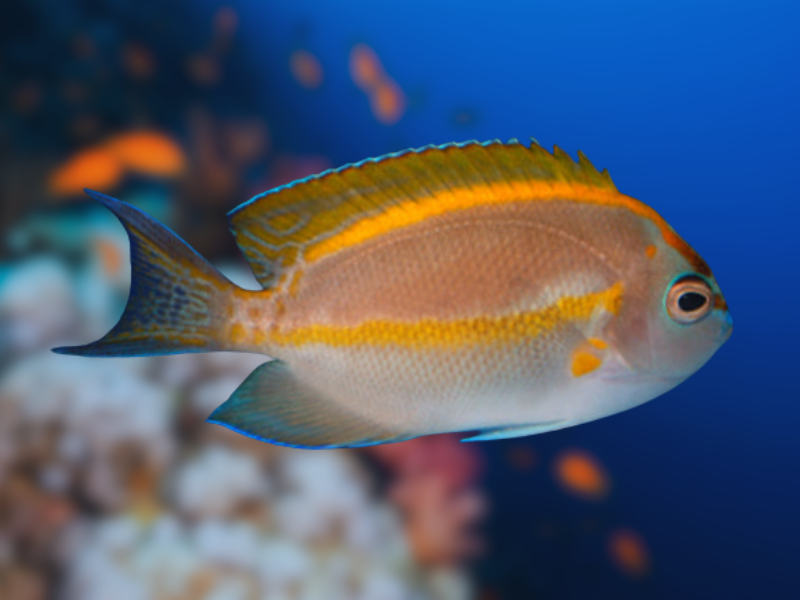
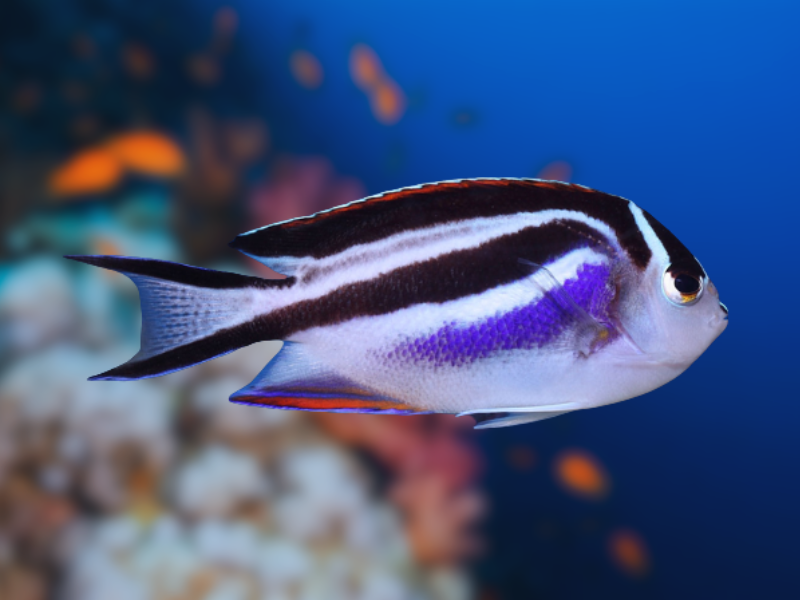
A practical starting point is to keep a harem-style group with one male and multiple females. This structure helps diffuse aggression and better matches the social dynamics commonly seen in midwater angelfish that form dominance-based groups. Sex identification is typically based on body shape and fin development rather than behavior alone: males are usually larger and show more pronounced fin extensions, while females are smaller with less developed fin tips. Because juveniles may not be readily sexed, acquiring a small group and allowing a hierarchy to develop is a common strategy; the dominant individual may transition to male in a stable group.
They are egg-layers with pelagic (free-floating) eggs. Spawning generally occurs in the water column, often around low-stress periods such as dusk, with the pair rising into open water to release gametes. In a display aquarium, eggs are usually rapidly removed by filtration or consumed by tankmates, so controlled breeding typically uses a dedicated system and either an egg-collection method or immediate transfer to a separate incubation vessel.
For incubation, gentle aeration and stable, high-quality seawater are critical, along with protection from strong mechanical filtration that can damage eggs. Once hatched, the primary challenge is larval nutrition. The larvae are small and require appropriately sized live planktonic foods. Most attempts fail at first feeding unless the aquarist can supply dense cultures of suitable micro-live foods and maintain excellent water hygiene without stripping the water of prey. As larvae grow, they can be transitioned through progressively larger live foods before weaning onto finely prepared diets.
Fry care emphasizes consistency: steady lighting schedules, stable water conditions, and meticulous control of microbial blooms. Use slow, frequent water exchanges rather than large disruptive changes, and keep aeration and flow gentle enough to avoid exhausting larvae while still maintaining oxygenation. Because metamorphosis and settlement are sensitive periods, provide a calm environment and introduce small shelter structures as juveniles begin to resemble miniature adults.
Overall, the most achievable pathway is: condition adults with a varied diet, maintain a stable harem with minimal social stress, isolate spawning events from predation and filtration loss, and invest heavily in live-food culture and larval-system management.
Sexual Dimorphism
Generate Printable Card
Create a printable card for this creature to display in your store or aquarium. The card includes a QR code for quick access to more information.