Danio rerio
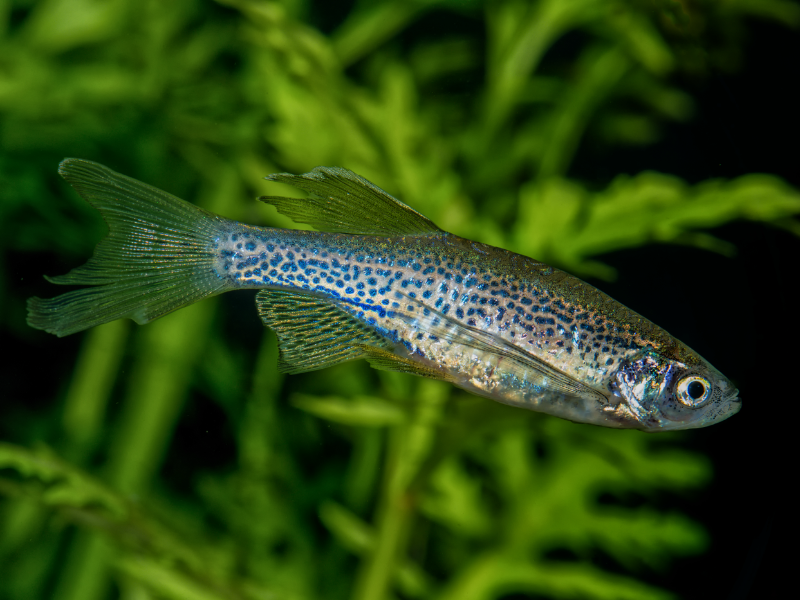
var. Leopard
Scientific Classification
Quick Stats
Aquarium Building Information
About This Species
Basic Description
Detailed Description
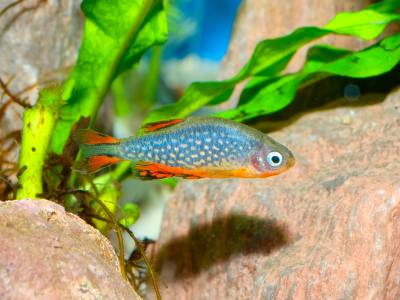
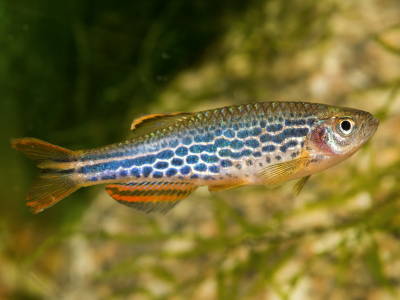
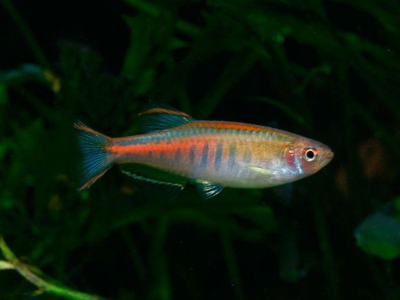
Danio rerio, commonly known as the Zebrafish, is a dynamic and resilient member of the Cyprinidae family, originating from the freshwater systems of Asia. In their natural habitat, they are found in medium-flow streams, rice paddies, and ponds, which informs their need for adequate water movement and oxygenation in an aquarium. Their torpedo-like, fusiform body shape is a classic adaptation for life as a fast, active swimmer, allowing them to navigate currents with ease. This high activity level is fueled by a high metabolism, necessitating daily feedings of a varied, omnivorous diet. A combination of high-quality dry foods (flakes, pellets) and regular offerings of frozen, freeze-dried, or live foods will ensure他们 receive the balanced nutrition required for optimal health and vitality.
In captivity, their social profile is one of their most defining characteristics. They are schooling fish that must be kept in groups to feel secure and exhibit their fascinating interactive behaviors. A lack of proper school size can lead to stress and skittishness. They predominantly inhabit the top and middle swimming zones of a tank, so open swimming space in these areas سرطان. These fish are known for jejich ability to escape from uncovered tanks, a behavior that underscores the importance of a secure aquarium lid. Despite their high activity, they are considered to have a low bioload, meaning they produce a relatively small amount of waste for their size. However, their high metabolism and daily feeding schedule still contribute to the overall nutrient load, necessitating consistent tank maintenance and filtration. Their tolerance for a broad spectrum of water hardness and pH levels makes them a forgiving species for hobbyists, but stable conditions are always preferable for long-term health. Due to their peaceful disposition, they integrate well into community aquariums with other small, non-aggressive fish.
Scientific Description
Danio rerio is a small, fusiform-bodied cyprinid native to the freshwater ecosystems of the Himalayan region and South Asia. As a member of the family Cyprinidae, it is taxonomically related to other carps and minnows. Its morphology is highly adapted for a pelagic lifestyle in its native habitats, which include streams and slow-moving rivers. The streamlined body minimizes drag, enabling हाई-speed, sustained swimming, a characteristic behavior of the species. Physiologically, D. rerio exhibits a high metabolic rate, which corresponds with its 'very active' activity level and medium oxygen consumption. It is an omnivore, feeding on a wide range of food sources such as zooplankton, insects, and algae in the wild. This dietary plasticity contributes to its ecological success.
The species demonstrates notable tolerance to a wide range of hydrochemical parameters, thriving in both slightly acidic and alkaline waters, and across a considerable gradient of water hardness. While strictly a freshwater fish, it can tolerate very low levels of salinity. Its reproductive strategy is that of an egg-scatterer, a common method among cyprinids, and it has a high reproductive output, which contributes to its population stability. The International Union for Conservation of Nature (IUCN) has classified D. rerio as 'Least Concern' (LC), indicating a widespread and abundant species that is not currently facing significant threats to its survival in the wild. Beyond its role in its ecosystem and the aquarium hobby, Danio rerio is a premier model organism in scientific research, particularly in genetics, developmental biology, and toxicology, due to its rapid development, transparent embryos, and genetic similarity to humans.
Breeding Description
The reproduction of this species in a home aquarium is generally considered to be a straightforward process, making it an excellent choice for hobbyists new to breeding. These fish are egg-scatterers, meaning the females will release their eggs into the water column, which are then fertilized by the males. They exhibit no parental care and will actively predate on their own eggs and fry, necessitating a dedicated breeding setup to ensure a successful yield. Distinguishing between the sexes is most apparent in mature, well-conditioned individuals. Females typically have a larger, more rounded abdomen, giving them a fuller body shape compared to the more slender, streamlined males.
To initiate spawning, a separate breeding tank is highly recommended. This tank should be equipped with a substrate that protects the eggs, such as a layer of marbles, a spawning mop, or a mesh screen raised slightly above the tank floor. This allows the non-adhesive eggs to fall through and remain safe from the adults. For conditioning, the potential parents should be fed a protein-rich diet of live and frozen foods for a week or two prior to the breeding attempt. Introducing a group with a higher ratio of males to females, such as two or three males per female, can increase the likelihood of successful fertilization. Spawning is often triggered by a significant water change with slightly cooler water or by the first light of morning. Once spawning is complete, the adult fish should be removed promptly. The eggs will typically hatch within a couple of days. The newly emerged fry will first consume their yolk sacs before becoming free-swimming. At this stage, they are incredibly small and must be fed microscopic foods like infusoria or commercially prepared liquid fry food. As they grow, they can be gradually transitioned to larger foods such as microworms and newly hatched brine shrimp.
Related Images
Leopard
Generate Printable Card
Create a printable card for this creature to display in your store or aquarium. The card includes a QR code for quick access to more information.